Abstract
Ethiopia is a landlocked federal republic located in eastern Africa. Over the past decade, its economy has experienced significant growth, with GDP expanding at an average rate of 10.8% per year. While coffee and gold remain the principal exports, the country also hosts diverse mineral resources, including more than 40 varieties of colored gemstones such as emerald, tourmaline, opal, aquamarine, jasper, agate, chrysoprase, peridot, and amethyst. Gemstone mining is predominantly artisanal small-scale (ASM) and currently produces rough stones due to limited lapidary technology and skilled labor. This has restricted value addition within the country. The central objective of this manuscript is to examine the importance of lapidary technology, identify investment opportunities, and facilitate entrepreneur engagement for sustainable gemstone wealth. It aims to provide potential investors with a general understanding of the business to support critical investment decisions. The study outlines Ethiopia’s gemstone resources and describes lapidary techniques for creating jewelry and decorative items using new technology. Commercialization, mining-area preservation, and mine life sustainability are highlighted as key factors alongside economic and social impacts of a developing lapidary sector. This paper reviews the historical development of the lapidary industry in Ethiopia, assesses the challenges hindering growth, and presents guidance on obtaining legal licenses to start lapidary operations and to import gemstone-cutting and polishing machinery duty-free from abroad.
|
Published in
|
Research & Development (Volume 7, Issue 1)
|
|
DOI
|
10.11648/j.rd.20260701.14
|
|
Page(s)
|
44-53 |
|
Creative Commons
|

This is an Open Access article, distributed under the terms of the Creative Commons Attribution 4.0 International License (http://creativecommons.org/licenses/by/4.0/), which permits unrestricted use, distribution and reproduction in any medium or format, provided the original work is properly cited.
|
|
Copyright
|
Copyright © The Author(s), 2026. Published by Science Publishing Group
|
Keywords
Gemstone, Lapidary, Jasper, Jewelry, Rough, Artisanal
1. Introduction
Ethiopia is recognized for its rich mineral wealth and an impressive variety of over 40 colored gemstone deposits including emerald, tourmaline, opal, aquamarine, jasper, and amethyst. Notably, discoveries such as the color-changing chrome grossular green garnet have boosted the country’s gem profile, with opal, emerald, and sapphire dominating its global market presence. Raw gemstones, called rough, require cutting and polishing, or lapidary work, to reveal their beauty and value. This skilled craft transforms rough stones into radiant, geometric gems, increasing their worth as size decreases in each manufacturing stage (White Paper). The process combines artistry and technical expertise, essential to the gemstone industry
| [1] | The World Bank Group. 2015. Ethiopia Poverty Assessment 2014. |
| [2] | The Central Intelligence Agency 2015, November 4. Africa: Ethiopia. The World Fact Book. |
| [6] | Johnson, M., R. C. Kammerling, D. G. DeGhionno, and J. I. Koivula 1996. Opal from Shewa Province, Ethiopia Gems and Gemology, Vol. 32, No. 2. |
[1, 2, 6]
.
Sustainable development in Ethiopia’s gemstone sector emphasizes economic growth, social welfare, and environmental protection, aligning with global shifts toward sustainability in production practices
| [19] | Dubinski and Ellen Wohl published "Relationships between block quarrying, bed shear stress, and stream power: A physical model of block quarrying of a jointed bedrock channel" in Geomorphology in 2013. |
[19]
. Government initiatives, including collaborations with the United Nations Industrial Development Project, have advanced gemstone processing, particularly for varieties like peridot and silica gems. Artisanal and small-scale mining (ASM) dominates gemstone extraction, with thousands engaged in mining opal, emerald, and sapphire across regions like North Wello Delanta and Shakiso-Kintcha. Ethiopia ranks as the world’s second-largest opal producer after Australia, with significant community involvement associations supporting gem mining and trade
| [1] | The World Bank Group. 2015. Ethiopia Poverty Assessment 2014. |
| [3] | Yager, T. (2014). 2012 Minerals Yearbook: Ethiopia. The US Geological Survey. |
| [4] | Statistics provided by the Ministry of Mines, November 19, 2015. |
| [10] | Arango-Aramburo, S., Jaramillo, P., Olaya, Y., Smith, R., Restrepo, OJ, Saldarriaga-Isaza, A., Arias-Gaviria, J., Parra, JF., Larsen, ER., Gomes-Rios, LM., & Castelhanos-Nio, LY. (2017). Simulating mining policies in developing countries: the case of Colombia Socio-Economic Planning Sciences, 60, 99–113. https://doi.org/10.1016/j.seps.2017.04.002 |
[1, 3, 4, 10]
.
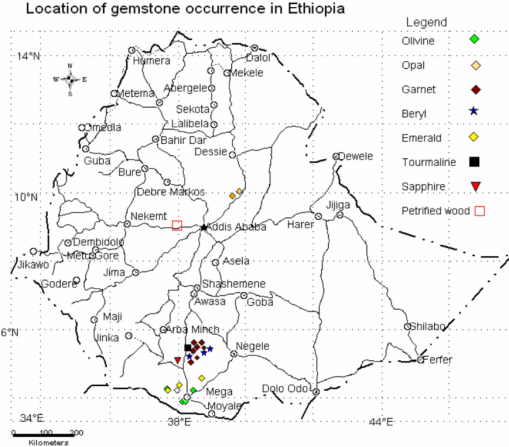
Figure 1. Location map of different Gemstone Occurrence in Ethiopia.
The trade or business of gemstones is taking place anywhere in the country, in small towns near mining areas or in main towns, between miners, brokers (dealers) and exporters of gemstones brought to main cities like Addis Ababa, where foreign buyers can purchase and export. All in all, rough gemstones are gem commodities exported abroad. Indians, Chinese, Siri Lankan, are the main buyers of Ethiopian gemstones
| [5] | Yager, T. (2014). The Mineral Industry of Ethiopia. United States Geological Survey. |
| [7] | Araya, E. 2013, August 4. Rough Cut Bans U-Turn in Bid to Boost Mining Revenue Addis Fortune. |
| [8] | S. H. Ali, Treasures of the Earth: Need, Greed, and a Sustainable Future (2009). |
| [9] | Shyamalie Ekanayake and Dhammika Abeysinghe, Asian Academy of Management Journal, vol. 15, no. 2, pp. 217–237, July 2010 217. entrepreneurial strategic innovation model for attaining premium value for the Sri Lankan gem and jewelry industry. |
[5, 7-9]
.
2. Methodology
This study investigates the application of lapidary technology to promote sustainable sourcing and development of rough gemstones in Ethiopia. The methodology involved a comprehensive literature review to understand the stages of lapidary work, alongside document analysis, semi-structured interviews, site visits, and expert consultations. Experts, lapidary workers, and traders were interviewed to provide practical insights, while government statistics, previous studies, journals, and newspaper articles were reviewed to understand the current state of the Ethiopian gemstone industry. A cost-benefit analysis was conducted to assess the value addition and profitability of processing rough gemstones.
A gemstone sample from Negelle Borena, Oromia Regional State, was utilized for practical lapidary work at the Ethiopia Mineral Corporation Center. This hands-on component provided critical data on the feasibility and outcomes of gemstone processing. Overall, the study combines qualitative and quantitative approaches to identify development options for advancing Ethiopia’s rough gemstone sector sustainably.
2.1. Origin of the Sample
The Ethiopian Mineral, Petroleum, and Biofuel Corporation's workshop center is where the value-added processing is carried out on the gem samples that are from areas of the country with known gemstone resources. A rough gemstone samples collected from the Oromia region around Negelle Borena is used to conduct the lapidary work for the purpose of this study.
2.2. Lapidary Making: Materials and Sequential Processing Steps
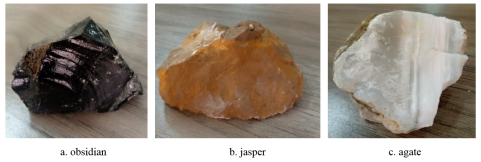
Materials used in lapidary making include raw samples of obsidian, agate, and jasper; sawing machines with blades and lubricants (gasoil or water); templates; trim saw with lubricants; and grinding and polishing machines with polishing wheels. The gemstone processing method involves these sequential steps: analyzing the gemstone's characteristics, cutting the raw sample, pre-forming using templates, followed by pre-polishing and final polishing.
3. Result and Discussion
Based on the methodology design, the following are the results and discussions presented with reference to the aim of the study, which is to examine the role of lapidary technology to the gemstone resource development in Ethiopia.
3.1. Gemstone Value Chain and Lapidary Work Processes
With small companies bound together in intricate trading relationship, the gemstone industry is highly fragmented at all levels from exploration, to mining, to processing and distribution.
Figure 2. Between the point of extraction at site of gemstone mining and a point of sales on the global retail market, the gemstone value chain has four key stages.
3.2. Lapidary Technology and Techniques
In lapidary technology, there are so many processes and machinery that are used. The machine and the process are listed below.
3.2.1. Sawing
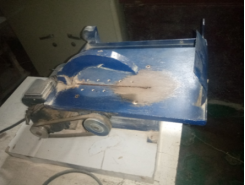
Slabbing: A slab saw is used to slice raw stone into slabs of the specified thickness. A standard slab saw is made for sawing big pieces of minerals (such as agate, jasper, lapis lazuli, sodalite, and jade, among others) into slabs or blocks for further processing, with the exception of diamonds. A turntable clamp is used to hold the stone to be worked so that the depth of cut can be doubled.
Trimming: The trim saw is used to shape stones into cabochons, faceted stones, tiny plates, etc. for further processing. With petroleum oil as a coolant, diamond saw blades (150 or 250 mm in diameter) can cut any kind of stone. To saw the stone into the required shape and size, the stone is physically directed toward the blade. After cobbing and fine knocking, rough gemstones of the more precious variety are typically tiny enough to be sawed by a trim saw without being slabbed first.
3.2.2. Grinding and Polishing
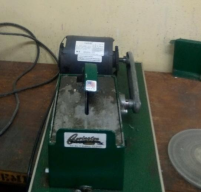
Grinding: The abrasive procedure of grinding is used to give rough forms to gemstones. The phrase describes the use of abrasive wheels in lapidary operations. The most popular wheels come in a variety of sizes and forms, are manufactured of silicon carborundum, and use abrasive grains of various sizes depending on the wheel's intended use. Many grinding wheels used in modern practice have diamond grains attached to a metal or plastic matrix. A gem cutter uses grinding wheels to shape cabochons and to preform rough for faceted gems, as well as to grind bevels on flats, shape carvings, profile pieces for inlay work, and many other tasks.
While fine grits are utilized if the abrasive action needs to be slower and smoother, coarse grits are employed to manufacture wheels that remove material quickly. The numbering of grit sizes for loose grains and abrasive wheels in grinding equipment indicates the degree of fineness of the particles; for example, 100 grit is considered coarse and 1200 grit is considered very fine.
Table 1. lists the grits used in lapidary work, including coated and loose grain.
Table 1.
Grit Size from | [17] | Zion E. Simwanza (2001) An Assessment of the Lapidary Industry in Zambia. |
Grit Size | Micron Size | Purpose |
60 | 400 | Rough grinding and Tumbling |
100 | 150 | Rough grinding and Tumbling |
220 | 60 | Fine grinding, lapping, and sanding |
325 | 45 | Very fine grinding, lapping, tumbling, and fine sanding |
600 | 30 | Very fine lapping and fine sanding |
1200 | 15 | Very fine lapping and repolishing. |
3.2.3. Grinding Wheels
Depending on the sort of machinery being used, carborandum wheels for gem cutting come in a number of diameters. The typical diameters range from 150 to 250 mm in diameter and 20 to 50 mm in thickness. Shaft holes are offered in sizes with diameters ranging from 20 to 30 mm to fit different equipment brands. The most common grit for rough shaping is 120, which is a medium-soft grade. A 220-grit wheel in a medium-hard grade works best for fine grinding when the goal is to smooth surfaces rather than remove a lot of material.
Table 2.
Grit Size and Usage from | [17] | Zion E. Simwanza (2001) An Assessment of the Lapidary Industry in Zambia. |
Grit Size | Usage |
180 | roughing (mostly done by vertical wheels) |
400/600 | quick cutting |
1500 | smoothing facets prior to polishing |
Grinding Powder: When employing diamond laps is not available, grinding powder is utilized in tumbling mills, vibrators, surface grinding machines, and for cutting facetted stones. For coarse and medium work, carborundum is used in grit sizes 80–320; for fine and very fine work, it is used in grit sizes 400–1200.
Sanding: Strong fabric coated in a coating of silicon carbide grit is the most typical sanding material. Only two or three types of grit are typically required, ranging in size from very coarse to very fine. 220 grit is frequently used for coarse sanding, whereas 400 or 600 grit is frequently used for finer sanding. The glue used to create standard sanding cloth is water-soluble. Another kind is resistant to the effects of water because it is saturated with plastic resin adhesive. Depending on the machine, sanding cloth comes in disk, strip, and belt forms. Water is used in almost all grinding, sanding, and polishing operations on gemstones.
Polishing
The final step in the preparation of gemstones is polishing. The brilliant and radiant smooth surfaces typical of polished gems are produced by pressing the shaped stone with considerable force against yielding materials such as felt, leather, cloth, or wood that have been charged with polishing agents. With the exception of diamond, most polishing agents are oxides of metals
.
1) aluminum oxide, 0–1 micron or finer
2) eerie oxide
3) chromic oxide
4) ferric oxide
5) chalk or the finest marble dust
6) tin oxider
7) tripoli
8) zirconium oxide
9) diamond (powder or paste), 0–2 micron
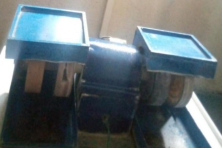
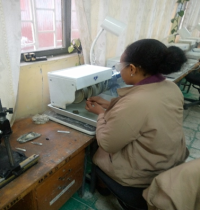
Figure 5. Polishing Machine.
There are two types of general polishers: those for polishing cabochons, flats, spheres, and other work demanding little accuracy; and those for polishing geometrically flat surfaces, such as on faceted gems. The first type embraces buffs constructed from yielding materials, such as fabric and leather, but also harder materials such as wood, which are less yielding.
3.3. Lapidary Techniques
It takes specialized equipment, lapidary arts skills, and a lot of practice to turn raw materials into jewels. Several of these procedures call for the use of tools or machines that, if handled without the right expertise, could harm you or your gemstone. Before attempting to use any machine or technique, you should get more training in it.
Step 1: Analyzing the Gemstone's Character
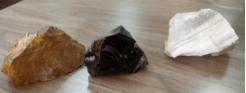
The project must be first determining the materials' worth for it. The shape that will yield the best value for the project should guide how can choose to prepare the ore. The cut must be chosen first for the majority of gemstones. Processed three samples—obsidian, agate, and jasper in the best manner while also considering the caliber and characteristics of the raw materials.
Step 1.1: Observe the characteristics of the gemstone, determine whether it is transparent, translucent, or opaque, and look for flaws.
Figure 6. Observe the character of raphe sample.
Step 1.2: Examine the hue of the gemstone and evaluate the caliber of your raw materials using a channeled source of light.
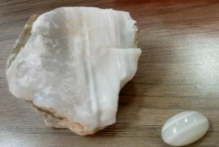
Figure 7. Assessed minerals by color and alignment.
You can choose the best processing method by looking at the characteristics of the gemstone.
Faceting techniques are frequently used to treat transparent gemstones without defaults.
Cabochon procedures are suitable for transparent gemstones with inclusions that are translucent, opaque, or have an optical impact.
Step 2: Assessing the Gemstone’s Color
Positioning the gemstone dome in order to create an appealing cabochon is the first stage in determining the grinding and shaping of the cabochon. When choosing how to grind and shape a gemstone, we can use a source of light to identify the best and most vivid color play, or color band. Typically, this is accomplished in three easy steps:
Step 2.1: Using a bright source of light, find the optimal orientation of the color band (or the best color for stones without play of color) to identify the best and most obvious play of color.
Figure 8. Determining alignments of the ore.
Step 2.2: The optical effect should be centered at the top of the face-up dome.
Step 2.3, which also involve positioning it so that the best color formation is aligned with it.
Step 3: Cutting
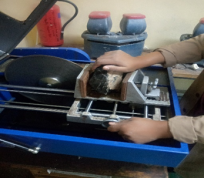
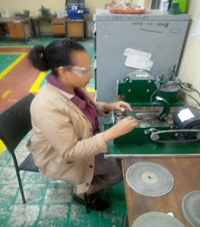
Sawing is the action of separating or cutting large stones into smaller ones or eliminating extra material from large, rough stones. Lapidarists must put on safety gear, including masks and goggles, when performing this procedure, which involves using sawing machine. In general, the process goes like this:
Step 3.1: Detect the part of the stone to be removed or sliced.
Step 3.2: Draw a sawing line.
Step 3.3: Double-check the water or gasoil level of the sawing machine.
Step 3.4: Saw carefully along the line that you have marked out.
Step 4: Pre-forming
The back and dome of the gemstone will be shaped by the lapidarist during the pre-forming phase. During this phase, lapidarists must put on safety gear, including masks and goggles. Usually, there are three steps in the procedure:
Step 4.1: Use 80 mesh and 220 mesh wheels to flatten the rear of the gemstone, bend the dome, and produce a chamfer.
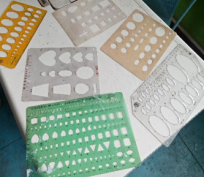
Step 4.2: Use a template and a copper or aluminum pencil to draw lines to make the ideal shape; and finally,
Figure 10. Templates are used to get the perfect shape.
Step 4.3: Focus on ensuring a symmetric and proportionate curved dome.
Step 5: Pre-polishing and polishing
A lapidarist will polish the gemstone to perfection at this step. Lapidarists are required to put on safety gear during this phase, like masks, goggles, and earplugs. The processing process ends with this stage. The goal is to get a sparkling surface because a smooth, well-finished gemstone will only sell well. Two steps are normally involved in this:
Step 5.1: Using the 280, 600, 1200, and 3000 wheels, create a chamfer on the dome and the back of the gemstone. To reach the optimum outcome, process the data step-by-step, refining the pre-publish using progressively finer tools.
Step 5.2: Use a polishing pad to buff or a piece of felt with cerium oxide to polish jasper, agate or obsidian
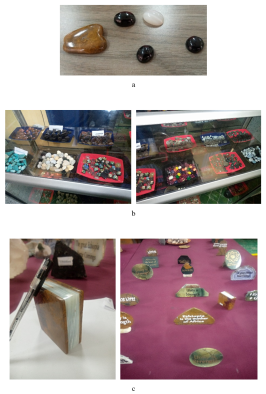
Last step getting beauty full, polished and gilt samples of the ore.
Figure 13. Output (a) laboratory result of my work, (b) from Yezna Jewelry and (c) from Ethiopian mine and biofuel corporate lab.
4. Challenges of Ethiopian Gemstone Industry
A shortage of raw stone supply and a market for cut stones were the two main issues raised by the respondents in this study as reasons for the demise of numerous lapidaries. Contrary to popular belief, Ethiopia has never experienced a shortage of stones; rather, the lapidary operators have been offering extremely low prices for purchases, which has caused the miners to avoid them in favor of middlemen and the international market. The reasons cited above for the downfall of the lapidary industry in Ethiopia may be the immediate causes, but the failure of government policies to safeguard the sector has had a long-term, pernicious effect. Only broad, indiscriminate laws covering the entire gemstone sector were implemented when the market for gemstones was liberalized; the demands of the local lapidaries were not considered. The fate of the industry was left up to the whims and ravages of ruthless market forces. A more comprehensive view of the situation in Ethiopia's gemstone sector reveals that the issues now plaguing the lapidary sector can be pinpointed as described below
| [11] | Dr. Yolande KyngdonMcKay, Angela Jorns, Barbara Wheat and Tom Cushman, with contributions from Anna Barker, Estelle Levin Nally and Sileshi Nemomissa. (2016) An Analysis of the Commercial Potential of Ethiopia’s Colored Gemstone Industry. |
| [15] | World Gemstone Exploration & Mining Consultant Company Limited, 1368 Charoen-Krung Road, Bangrak, Bangkok, Thailand, 10500. |
[11, 15]
.
4.1. Lack of a Local Market for Gemstones
Most industries only start to grow into international trade once their product line has completely saturated the local market. The lapidary sector in Ethiopia has never experienced this. Since the expatriate population began to decline, the sector has always focused on international markets. Insiders in the business have expressed dissatisfaction over the weak local market for gemstone products. In terms of economics, gemstone products are categorized as luxury commodities, and demand for them is correlated with the presence of discretionary income, which is essentially nonexistent for the great majority of Ethiopians. As was previously mentioned, poverty is to blame for this. This explains why the few remaining lapidaries are held by foreigners who have links to markets abroad and can afford to travel there
| [12] | Saldarriaga-Isaza, A., Villegas-Palacio, C., & Arango, S. (2013). The public good dilemma of a nonrenewable common resource: a look at the facts of artisanal gold mining Resource Policy, 38, 224–232. https://doi.org/10.1016/j.resourpol.2013.02.001 |
| [15] | World Gemstone Exploration & Mining Consultant Company Limited, 1368 Charoen-Krung Road, Bangrak, Bangkok, Thailand, 10500. |
[12, 15]
.
4.2. Over-liberalization of the Licensing System
There is no qualification process for applicants seeking a license as a gemstone dealer under the new liberalized economy. In the previous centralist economy, to be authorized to trade in gemstones, one had to be the owner of a mine, lapidary, or jewelry store. Unrestricted access to the gemstone trade has led to the emergence of "authorized" intermediaries. These intermediaries roam the mine sites, purchasing carefully chosen stones of high quality while excluding low-grade stones that even lapidaries cannot afford. This is one of the reasons why some lapidaries complain about the lack of stones. The stones are typically bought in this way and then illegally exported from the nation
| [13] | Teshome, F.; Kolhe, K. P. (2019). Development of a Low-Cost Gemstone Polishing and Cutting Machine. |
| [18] | Federal Democratic Republic of Ethiopia Ministry of Mines, Petroleum, and Natural Gas Gemstone Technical Training Manual 2016. |
[13, 18]
.
4.3. Lack of Capital in the Lapidary Industry
Typically, the lapidary business doesn't have the financial resources to give miners fair prices for rough gemstone acquisitions. This helps to explain why large mines have developed export markets whereas small-scale miners sell to middlemen, who typically provide slightly higher pricing.
4.4. Lack of an Established Gemstone Exchange
The development of the gemstone business in general and the lapidary industry has been impeded by the lack of a Gemstone Exchange. International buyers prefer a single location to conduct all of their transactions, which Ethiopia now lacks. In order to negotiate their own market conditions, individual miners and lapidary business owners travel abroad. The small-scale miners sell their produce to middlemen since they cannot afford to travel. If there were a Gemstone Exchange facility, miners who are unaware of the value added when a rough gemstone is cut would be drawn to cut and polish their produce since they would be aware of the price differences between the two. As a result, a gemstone exchange would aid in the successful development of the lapidary business since producers would be encouraged to cut stones in order to boost profitability and cash flow
| [16] | Ejigu, A. A., Ketemu, D. G., Endalew, S. A., & Assen, W. Y. (2020). Challenges in the Utilization of Precious Opal in Ethiopia: A Case Study from the Delanta Area, South Wollo, Ethiopia Abyssinia Journal of Science and Technology, 5(2), 14–21. https://doi.org/10.20372/ajst.2020.5.2.112 |
| [17] | Zion E. Simwanza (2001) An Assessment of the Lapidary Industry in Zambia. |
[16, 17]
.
4.5. Import Taxes on Rough Gemstones
Operating on my own locally, lapidaries don't have easy access to high-quality stones. The import duty makes it impossible to imagine processing imported raw materials. As was previously mentioned, only those lapidaries that are owned by the proprietors of gemstone mines may successfully provide their own lapidaries with raw stones.
4.6. Inadequate Government Policy on Downstream Processing
Although processing minerals is mentioned in the existing mining strategy, exporting raw materials benefits their significant offshore commercial interests. It is obvious that in order to Change this scenario, suitable legislative action would be needed.
Lack of Financial Resources: Many lapidary business owners lack the working cash needed to purchase the rough stones in the quantity and quality necessary for profitable operations.
4.7. Adequate Valuation Skills
Many gemstone miners are not skilled in appraisal. They typically rely on middlemen who determine the prices and clearly take advantage of their ignorance. This is due to a number of causes, including:
1) Lack of gemological skills and,
2) Inadequate access to marketing information on trends in pricing on international markets.
4.8. Inadequate Lapidary Skills
Highly specialized training is necessary for the Ethiopian lapidary industry to assert itself, reach international gemstone markets, and favorably compete with the more than century-old skilled gem cutters of India, China, Thailand, and Israel. High-quality stones are painstakingly cut by experts, many of whom spend many years honing their craft.
Regarding the need for national manpower development, the government has applied a double standard. Similar organizations were created to support agriculture. Despite Ethiopia being a large producer of gemstones, no parallel training was offered for the sector of gemstone processing.
5. Economic and Social Impact of Lapidary Technology
5.1. Economic Impact of Lapidary Technology
Ensuring optimal utilization of scarce resources, preventing waste, and extracting the maximum value from available resources, a multimillion-dollar industry will be established, creating extensive job opportunities in the country; it will stimulate other economic sectors, including tourism, attracting foreign tourists and local buyers, generate foreign currency through exporting goods, and lead to the opening of art and craft shops nationwide. There will be more investors drawn to this lucrative business, with the sector making a tremendous contribution to GDP growth and increasing the economy’s productive capacity, while providing protection against economic risks such as unemployment and old-age destitution.
5.2. Social Impact of Lapidary Technology
It will create and develop knowledge, local skills, innovations, and opportunities for those engaged in these activities, driving a transformation from manual craftsmanship by smiths to industrial technology. A safe and conducive investment environment will be established to attract foreign investors, supporting clean, green, and safe operations. A large market link will be built between raw material suppliers and industries, correcting the current pattern of resource undermine, especially gemstones. A legal and readily accessible supply chain for raw gemstones must be established to underpin this transformation.
6. Conclusion
Ethiopia produces a wide variety and large quantity of gemstones, offering strong potential for a durable lapidary sector supported by a secured global market for cut stones. However, inadequate legislation, lack of supportive policies, and absence of a dedicated gemstone exchange have left the industry in decline. To revive the lapidary business, comprehensive regulations and an independent exchange are essential. Compared to base metal refining, lapidary requires less capital investment and shows positive value potentials, making it a viable sector to grow under the right legal and institutional framework.
Operating a lapidary in Ethiopia legally requires Ethiopian citizenship and a license from the Ministry of Mines, Petroleum and Natural Gas (MoMPNG). Licensed operators can import machinery duty-free, though better government communication is needed. Despite relatively simple legal requirements, lapidary businesses face significant challenges, notably finding and training skilled staff to international standards and securing adequate financing. Expanding lapidary training, introducing new technologies, and promoting decorative chip gemstones can boost the sector’s contribution to national development.
Abbreviations
ASM | Artisanal and Small-scale Mining |
MOM | Ministry of Mines |
UN | United Nations |
MoMPNG | Ministry of Mines, Petroleum and Natural Gas |
EPA | Environmental Protection Authority |
Acknowledgments
The authors sincerely thank Dr. Abubeker Yimam for his constructive comments and suggestions throughout the research. The extended gratitude to the Addis Ababa environmental protection authority (EPA) for its comprehensive sponsorship and logistical support during fieldwork. Yezina lapidary for granting permission to work at the work shop site and for providing access to borehole data and other relevant information about the study area.
Author Contributions
Tsion Shumalem: Conceptualization, Data curation, Formal Analysis, Funding acquisition, Investigation, Methodology, Validation, Visualization, Writing – original draft, Writing – review & editing
Ewunetu Mitku: Conceptualization, Data curation, Formal Analysis, Funding acquisition, Investigation, Project administration, Supervision, Writing – review & editing
Data Availability Statement
The data used in the study will be available upon request.
Conflicts of Interest
The authors declare no conflicts of interest.
References
| [1] |
The World Bank Group. 2015. Ethiopia Poverty Assessment 2014.
|
| [2] |
The Central Intelligence Agency 2015, November 4. Africa: Ethiopia. The World Fact Book.
|
| [3] |
Yager, T. (2014). 2012 Minerals Yearbook: Ethiopia. The US Geological Survey.
|
| [4] |
Statistics provided by the Ministry of Mines, November 19, 2015.
|
| [5] |
Yager, T. (2014). The Mineral Industry of Ethiopia. United States Geological Survey.
|
| [6] |
Johnson, M., R. C. Kammerling, D. G. DeGhionno, and J. I. Koivula 1996. Opal from Shewa Province, Ethiopia Gems and Gemology, Vol. 32, No. 2.
|
| [7] |
Araya, E. 2013, August 4. Rough Cut Bans U-Turn in Bid to Boost Mining Revenue Addis Fortune.
|
| [8] |
S. H. Ali, Treasures of the Earth: Need, Greed, and a Sustainable Future (2009).
|
| [9] |
Shyamalie Ekanayake and Dhammika Abeysinghe, Asian Academy of Management Journal, vol. 15, no. 2, pp. 217–237, July 2010 217. entrepreneurial strategic innovation model for attaining premium value for the Sri Lankan gem and jewelry industry.
|
| [10] |
Arango-Aramburo, S., Jaramillo, P., Olaya, Y., Smith, R., Restrepo, OJ, Saldarriaga-Isaza, A., Arias-Gaviria, J., Parra, JF., Larsen, ER., Gomes-Rios, LM., & Castelhanos-Nio, LY. (2017). Simulating mining policies in developing countries: the case of Colombia Socio-Economic Planning Sciences, 60, 99–113.
https://doi.org/10.1016/j.seps.2017.04.002
|
| [11] |
Dr. Yolande KyngdonMcKay, Angela Jorns, Barbara Wheat and Tom Cushman, with contributions from Anna Barker, Estelle Levin Nally and Sileshi Nemomissa. (2016) An Analysis of the Commercial Potential of Ethiopia’s Colored Gemstone Industry.
|
| [12] |
Saldarriaga-Isaza, A., Villegas-Palacio, C., & Arango, S. (2013). The public good dilemma of a nonrenewable common resource: a look at the facts of artisanal gold mining Resource Policy, 38, 224–232.
https://doi.org/10.1016/j.resourpol.2013.02.001
|
| [13] |
Teshome, F.; Kolhe, K. P. (2019). Development of a Low-Cost Gemstone Polishing and Cutting Machine.
|
| [14] |
Guyana Times. (2018, January 28). North Pakaraima residents benefit from introductory lapidary course.
https://guyanatimesgy.com/north-pakaraima-residents-benefit-from-introductory-lapidary-course
|
| [15] |
World Gemstone Exploration & Mining Consultant Company Limited, 1368 Charoen-Krung Road, Bangrak, Bangkok, Thailand, 10500.
|
| [16] |
Ejigu, A. A., Ketemu, D. G., Endalew, S. A., & Assen, W. Y. (2020). Challenges in the Utilization of Precious Opal in Ethiopia: A Case Study from the Delanta Area, South Wollo, Ethiopia Abyssinia Journal of Science and Technology, 5(2), 14–21.
https://doi.org/10.20372/ajst.2020.5.2.112
|
| [17] |
Zion E. Simwanza (2001) An Assessment of the Lapidary Industry in Zambia.
|
| [18] |
Federal Democratic Republic of Ethiopia Ministry of Mines, Petroleum, and Natural Gas Gemstone Technical Training Manual 2016.
|
| [19] |
Dubinski and Ellen Wohl published "Relationships between block quarrying, bed shear stress, and stream power: A physical model of block quarrying of a jointed bedrock channel" in Geomorphology in 2013.
|
Cite This Article
-
APA Style
Shumalem, T., Mitku, E. (2026). Application of Lapidary Technology for Sustainable Gemstone Resource Development in Ethiopia. Research & Development, 7(1), 44-53. https://doi.org/10.11648/j.rd.20260701.14
 Copy
|
Copy
|
 Download
ACS Style
Shumalem, T.; Mitku, E. Application of Lapidary Technology for Sustainable Gemstone Resource Development in Ethiopia. Res. Dev. 2026, 7(1), 44-53. doi: 10.11648/j.rd.20260701.14
Copy
|
Download
AMA Style
Shumalem T, Mitku E. Application of Lapidary Technology for Sustainable Gemstone Resource Development in Ethiopia. Res Dev. 2026;7(1):44-53. doi: 10.11648/j.rd.20260701.14
Copy
|
Download
-
@article{10.11648/j.rd.20260701.14,
  author = {Tsion Shumalem and Ewunetu Mitku},
  title = {Application of Lapidary Technology for Sustainable Gemstone Resource Development in Ethiopia},
  journal = {Research & Development},
  volume = {7},
  number = {1},
  pages = {44-53},
  doi = {10.11648/j.rd.20260701.14},
  url = {https://doi.org/10.11648/j.rd.20260701.14},
  eprint = {https://article.sciencepublishinggroup.com/pdf/10.11648.j.rd.20260701.14},
  abstract = {Ethiopia is a landlocked federal republic located in eastern Africa. Over the past decade, its economy has experienced significant growth, with GDP expanding at an average rate of 10.8% per year. While coffee and gold remain the principal exports, the country also hosts diverse mineral resources, including more than 40 varieties of colored gemstones such as emerald, tourmaline, opal, aquamarine, jasper, agate, chrysoprase, peridot, and amethyst. Gemstone mining is predominantly artisanal small-scale (ASM) and currently produces rough stones due to limited lapidary technology and skilled labor. This has restricted value addition within the country. The central objective of this manuscript is to examine the importance of lapidary technology, identify investment opportunities, and facilitate entrepreneur engagement for sustainable gemstone wealth. It aims to provide potential investors with a general understanding of the business to support critical investment decisions. The study outlines Ethiopia’s gemstone resources and describes lapidary techniques for creating jewelry and decorative items using new technology. Commercialization, mining-area preservation, and mine life sustainability are highlighted as key factors alongside economic and social impacts of a developing lapidary sector. This paper reviews the historical development of the lapidary industry in Ethiopia, assesses the challenges hindering growth, and presents guidance on obtaining legal licenses to start lapidary operations and to import gemstone-cutting and polishing machinery duty-free from abroad.},
 year = {2026}
}
Copy
|
Download
-
TY  - JOUR
T1  - Application of Lapidary Technology for Sustainable Gemstone Resource Development in Ethiopia
AU  - Tsion Shumalem
AU  - Ewunetu Mitku
Y1  - 2026/03/23
PY  - 2026
N1  - https://doi.org/10.11648/j.rd.20260701.14
DO  - 10.11648/j.rd.20260701.14
T2  - Research & Development
JF  - Research & Development
JO  - Research & Development
SP  - 44
EP  - 53
PB  - Science Publishing Group
SN  - 2994-7057
UR  - https://doi.org/10.11648/j.rd.20260701.14
AB  - Ethiopia is a landlocked federal republic located in eastern Africa. Over the past decade, its economy has experienced significant growth, with GDP expanding at an average rate of 10.8% per year. While coffee and gold remain the principal exports, the country also hosts diverse mineral resources, including more than 40 varieties of colored gemstones such as emerald, tourmaline, opal, aquamarine, jasper, agate, chrysoprase, peridot, and amethyst. Gemstone mining is predominantly artisanal small-scale (ASM) and currently produces rough stones due to limited lapidary technology and skilled labor. This has restricted value addition within the country. The central objective of this manuscript is to examine the importance of lapidary technology, identify investment opportunities, and facilitate entrepreneur engagement for sustainable gemstone wealth. It aims to provide potential investors with a general understanding of the business to support critical investment decisions. The study outlines Ethiopia’s gemstone resources and describes lapidary techniques for creating jewelry and decorative items using new technology. Commercialization, mining-area preservation, and mine life sustainability are highlighted as key factors alongside economic and social impacts of a developing lapidary sector. This paper reviews the historical development of the lapidary industry in Ethiopia, assesses the challenges hindering growth, and presents guidance on obtaining legal licenses to start lapidary operations and to import gemstone-cutting and polishing machinery duty-free from abroad.
VL  - 7
IS  - 1
ER  -
Copy
|
Download




 Share This Article
 Twitter
 Linked In
 Facebook